We like to believe that we make our own decisions.
That we choose what to buy.
What to believe.
Who to trust.
What to click.
What to follow.
I certainly thought that about myself.
Then I read Robert Cialdini’s Influence.
And I had one uncomfortable realization:
I am much easier to influence than I thought.
Not because I am stupid.
Not because other people are secretly controlling me.
But because human beings rely on mental shortcuts all the time.
And once you notice those shortcuts, you start seeing them everywhere.
In shopping.
At work.
On social media.
In restaurants.
In emergencies.
Even when choosing a snack from a box.
That is what made this book so interesting to me.
It did not just teach me how influence works.
It made me notice how often it was already working on me.
- We Don’t Always Think. Sometimes We React.
- Add a Reason, and People Become More Likely to Say Yes
- If Everyone Is Choosing It, I Assume It Must Be Good
- Even a Box of Snacks Can Influence Me
- “Only 2 Left” Is Basically a Spell
- I Saw the Bystander Effect in Real Life
- Experts Are Useful. But “Expert” Is Not the Same as “Always Right.”
- Free Things Are Not Always Free
- Three Things I Changed After Reading This Book
- I Think This Book Is More Armor Than Weapon
- Final Thought: I Don’t Want to Be “Uninfluenced.” I Want to Be Aware.
We Don’t Always Think. Sometimes We React.
One of the most interesting ideas in the book is that people often respond automatically to certain cues.
We like to think every decision is carefully reasoned.
But in reality, that would be exhausting.
Modern life gives us too much information.
Too many choices.
Too many products.
Too many opinions.
So our brains use shortcuts.
If everyone else is choosing something, maybe it is good.
If an expert recommends it, maybe it is trustworthy.
If only three are left, maybe I should buy now.
If someone gives me something first, maybe I should return the favor.
These shortcuts are useful.
But they can also be used against us.
Add a Reason, and People Become More Likely to Say Yes
One idea that immediately reminded me of real life was the power of giving a reason.
Instead of saying:
“Can you help me with this?”
you say:
“Can you help me with this because we need to finish it by today?”
Simple difference.
But it often works better.
As soon as I read this, I thought of a coworker.
This person is very good at asking for help.
There is always a reason.
Always some context.
And somehow, I often end up helping.
At the time, I just thought:
“Wow, this person is good at asking.”
After reading Cialdini, I started wondering:
Wait… has this person already mastered the weapon of influence?
Probably not.
They are probably just a good communicator.
But I learned something useful.
When I ask someone for help, I should explain why.
Not to manipulate them.
But to give them a clear reason to understand the request.
If Everyone Is Choosing It, I Assume It Must Be Good
I am weak to crowds.
If I see a long line outside a restaurant, I immediately think:
“This place must be good.”
If Amazon shows:
4.8 stars.
5,000 reviews.
“Best Seller.”
I relax.
I feel safer buying it.
Even before I really understand the product.
This is social proof.
We look at what other people are doing to help decide what we should do.
Again, this is not stupid.
It is efficient.
But once I noticed it, I realized how often it shapes my choices.
Even a Box of Snacks Can Influence Me
Imagine someone offers a box of assorted sweets and says:
“Take whichever one you like.”
There are several flavors.
But one flavor is almost gone.
For some reason, I suddenly want that one.
Why?
Because other people already chose it.
So my brain quietly says:
“That one must be popular.”
No one told me that.
No one proved it.
I just assumed it.
Same thing with shopping.
I see:
“20% reward points.”
And suddenly a product I was not even planning to buy becomes interesting.
Then I realized something embarrassing:
The best discount is still not buying something I do not need.
Simple.
Obvious.
And somehow still difficult.
“Only 2 Left” Is Basically a Spell
Scarcity is one of the strongest ideas in the book.
People tend to value things more when they seem limited.
Limited edition.
Only today.
Only three left.
Sale ends tonight.
I am extremely vulnerable to this.
I can be looking at something casually.
Then I see:
“Only 2 left in stock.”
And suddenly my brain changes.
Five seconds ago:
“Maybe someday.”
Now:
“This could be my last chance.”
Calm down.
It is a kitchen item.
Not the last helicopter leaving the city.
But that is how scarcity feels.
So I made one rule for myself:
When I see “limited,” “last chance,” or “only a few left,” I pause.
Then I ask:
Would I still want this if there were 100 in stock?
That question is surprisingly useful.
I Saw the Bystander Effect in Real Life
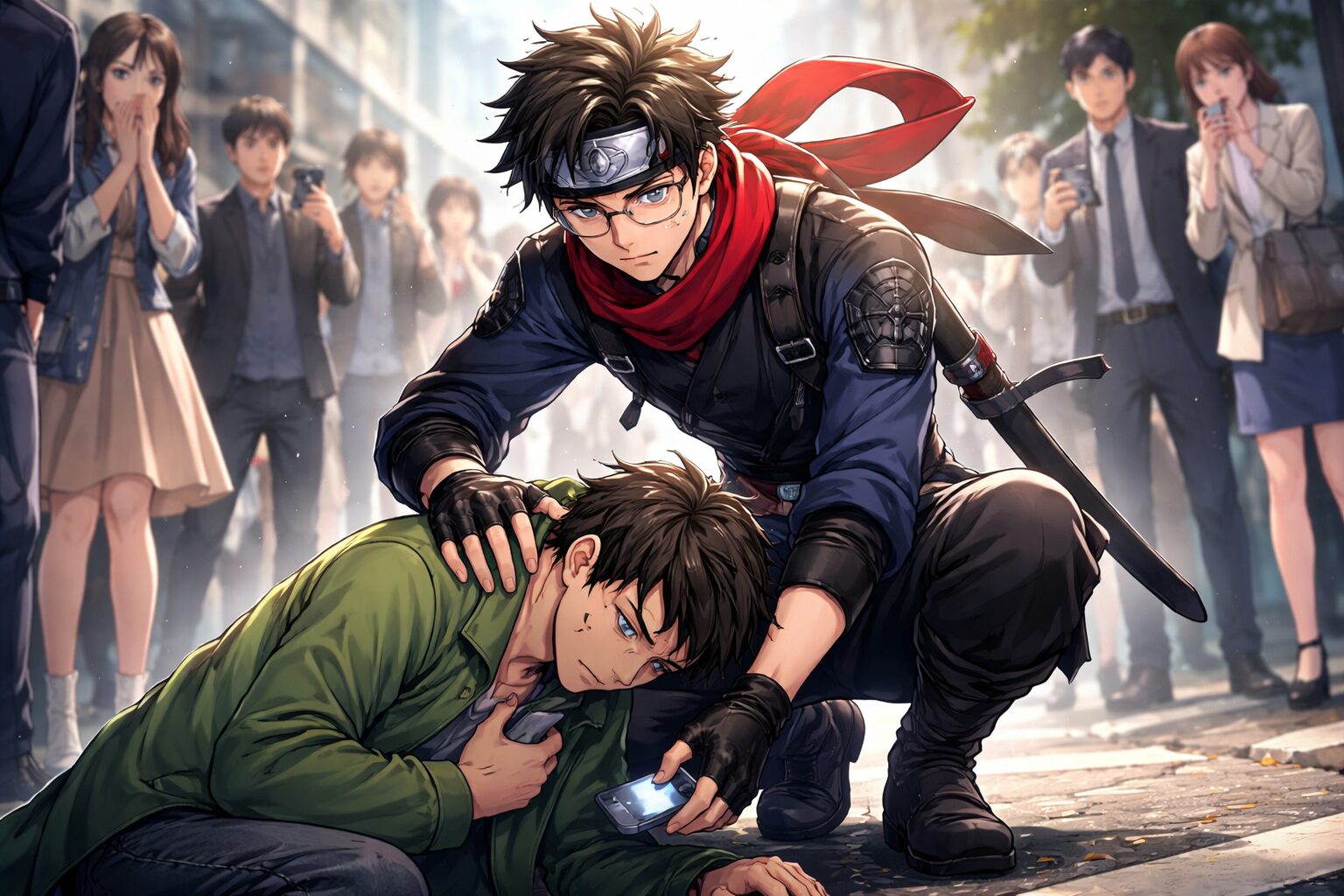
One of the most practical parts of the book was about emergencies.
When many people are present, something strange can happen.
Everyone assumes someone else will act.
Or everyone looks around and thinks:
“No one else seems worried, so maybe it is fine.”
That means a person can need help while everyone waits.
The book explains that in an emergency, saying:
“Someone call an ambulance!”
may be less effective than saying:
“You in the blue shirt — please call an ambulance.”
Specific person.
Specific action.
That can break the hesitation.
Not long after reading this, I had a moment that made the idea feel very real.
I was on a train.
A man was slumped sideways across his seat.
He did not look normal.
I looked at him.
Then I looked around.
No one moved.
And for a second, I also hesitated.
I thought:
“Maybe he is okay.”
“Maybe someone else knows.”
“Maybe I am overreacting.”
Then I suddenly remembered the book.
Wait. I literally just read about this.
I was about to stand up and ask if he was okay.
And then a woman nearby moved first.
She leaned toward him and asked:
“Are you alright?”
Immediately.
No hesitation.
In that moment, she looked like some kind of emergency-response saint.
I felt a little embarrassed.
Because I knew the psychology.
But I still almost followed the crowd.
Fortunately, the man seemed to have simply had too much to drink.
Nothing serious happened.
But I learned something important:
Knowing is not the same as acting.
That experience stayed with me more than the theory itself.
Experts Are Useful. But “Expert” Is Not the Same as “Always Right.”
Authority is another powerful shortcut.
Doctor.
Professor.
Specialist.
Famous company.
Official-looking title.
We naturally trust authority.
And often, we should.
Experts know more than we do.
But I also realized how easily “expert says this” can become the end of thinking.
Now I try to ask:
What is the evidence?
Do other experts agree?
Is there another explanation?
What are the incentives?
This matters in health.
Money.
Work.
Parenting.
Almost everything.
I am not trying to become suspicious of everyone.
I just want to go one step beyond:
“A smart person said it, so it must be true.”
Free Things Are Not Always Free
Another principle in the book is reciprocity.
When someone gives us something, we often feel pressure to give something back.
This is part of normal human relationships.
It helps society work.
But it is also used in marketing.
Free sample.
Free gift.
Free trial.
Small favor.
Then comes the request.
And now it feels harder to say no.
Since reading the book, I try to notice this feeling.
If I receive something free, I ask:
“Would I still want this if they had not given me anything first?”
I am not always successful.
Free is powerful.
I am still human.
Training continues.
Three Things I Changed After Reading This Book
I did not want this book to become one more “interesting book” that I forgot two weeks later.
So I decided to change three things.
1. Pause when I see scarcity
If something says:
“Only 1 left.”
“Today only.”
“30% off.”
I pause.
Then I ask:
Do I actually need this?
Not:
“How much am I saving?”
But:
“Would I buy this at full price?”
That question changes everything.
2. Do not rely on one authority
If one expert says something important, I try to look for other views.
Not because I distrust experts.
But because one opinion should not become the entire truth.
3. Give reasons when I ask for help
When I ask someone to do something, I explain why.
Not as a trick.
But because people deserve context.
Good communication is easier when the other person understands the purpose.
I Think This Book Is More Armor Than Weapon
The Japanese title translates roughly as:
“Weapons of Influence.”
And yes, the book can help you understand how influence works.
But honestly?
I think its biggest value is defensive.
For me, this book became less of a weapon…
and more of a shield.
Ads.
Sales.
Social media.
Reviews.
Experts.
Crowds.
Discounts.
Limited-time offers.
All of these influence us.
That is normal.
The goal is probably not to become completely immune.
That is unrealistic.
The better goal is:
Notice when it is happening.
Pause.
Ask why.
Ask what changed.
Ask whether you wanted the thing before the trigger appeared.
That small pause might save money.
Prevent bad decisions.
Or in some cases, help you act when everyone else freezes.
Final Thought: I Don’t Want to Be “Uninfluenced.” I Want to Be Aware.
Before reading Influence, I thought I was fairly rational.
After reading it, I started noticing things everywhere.
The long line.
The five-star rating.
The “only 2 left” warning.
The authority figure.
The free gift.
The silent crowd.
The strange thing is:
The world did not change.
My awareness changed.
And I think that is what makes this book valuable.
If you work in sales or marketing, you will probably find it fascinating.
If you shop online too much, you may find it uncomfortable.
If you trust reviews, rankings, experts, and social media more than you realize…
you may start seeing your own behavior differently.
I definitely did.
I am still influenced.
Probably every day.
But now, every once in a while, I catch myself and think:
“Ah. I know what is happening here.”
That alone feels like progress.
My ninja attack power may not have increased.
But my defense definitely did.
Nin-nin. 🥷


コメント