
Hi, this is Hideic.
Let me introduce you to one of the most reliable supporting actors in Japanese home cooking.
Cheap.
Nutritious.
Easy to use.
Almost universally loved.
The egg.
And if a normal egg is a solid supporting actor, then ajitama—Japanese marinated soft-boiled eggs—is the version that suddenly gets its own spin-off series.
You may have seen one before.
A glossy brown egg sitting on top of ramen.
You cut it open.
The yolk is soft, rich, almost creamy.
And suddenly the bowl looks 40% more serious.
That is ajitama.
And in my house, we do not make two.
We make ten.
Because if something is this useful, why keep manufacturing it one lonely egg at a time?
- First, a Quick Note About Eggs in Japan
- Why Ajitama Is Basically the Utility Player of Japanese Food
- My Easy 10-Egg Ajitama Recipe
- Step 1: Put the Eggs in a Pan
- Step 2: Add a Small Amount of Water
- Step 3: Bring It to a Boil
- Step 4: Cover and Cook
- Step 5: Turn Off the Heat and Let Them Sit
- Step 6: Emergency Ice Bath
- Step 7: Peel Carefully
- Step 8: Add Mentsuyu
- The Moment You Cut One Open
- Why This Tiny Food Says Something Bigger About Japanese Cuisine
- If You Visit Japan, Try Ajitama
First, a Quick Note About Eggs in Japan
If you are reading this outside Japan, you may be thinking:
“Hold on. Soft-boiled eggs? Isn’t that risky?”
Good question.
This is where Japanese food culture gets interesting.
Japan has a long tradition of eating eggs raw or lightly cooked—think tamago kake gohan, where a raw egg is mixed directly into hot rice.
That culture is supported by strict hygiene practices throughout egg production, grading, packing, distribution, and storage.
Japan’s Ministry of Agriculture explains that raw egg consumption is possible in part because of hygiene controls at farms and egg-packing facilities, standards for shell eggs, and consumers generally storing eggs refrigerated and eating them promptly after cracking them.
Egg packages in Japan also display a best-before date that is generally intended to indicate the period during which the egg can be eaten raw when properly refrigerated.
That does not mean raw or soft eggs are risk-free.
Salmonella is still a real food-safety concern, and Japan’s Ministry of Agriculture specifically notes that undercooked egg dishes can cause food poisoning. Refrigeration and proper handling still matter.
So if you try this recipe in Japan, use fresh refrigerated eggs within the appropriate date and keep the finished eggs chilled.
If you are outside Japan, do not assume your local eggs are handled under the same system. Use eggs that are specifically considered suitable for raw or lightly cooked consumption in your country—or cook the yolks fully.
And for young children, elderly people, pregnant people, or anyone at higher risk from foodborne illness, fully cooked eggs are the safer choice.
All right.
Food safety briefing complete.
Back to the important issue:
How do we create an army of delicious eggs?
Why Ajitama Is Basically the Utility Player of Japanese Food
Ajitama is one of those foods that somehow works almost everywhere.
Ramen?
Ajitama.
Rice?
Ajitama.
Curry?
Ajitama.
Soba?
Ajitama.
Grilled fish and you feel the meal needs a little more protein?
Ajitama enters from the bench.
In my refrigerator, these eggs are basically waiting like:
“Coach. Put me in.”
And that is why I started making them in batches.
If I suddenly think,
“I want a marinated egg right now,”
it is already too late.
You have to cook it.
Cool it.
Peel it.
Marinate it.
Future Hideic does not want that problem.
So Present Hideic manufactures ten.
My Easy 10-Egg Ajitama Recipe
Ingredients
- 10 eggs
- Water, about 1 cm deep in a pan
- Concentrated Japanese mentsuyu noodle soup base
- Plenty of ice
- A zip-top storage bag
Mentsuyu is a common Japanese seasoning made mainly from soy sauce, dashi, and sweet seasonings.
If you are visiting Japan, you will find it in almost every supermarket.
It is basically a cheat code for easy Japanese cooking.
Step 1: Put the Eggs in a Pan
Place 10 refrigerated eggs carefully in a pan.
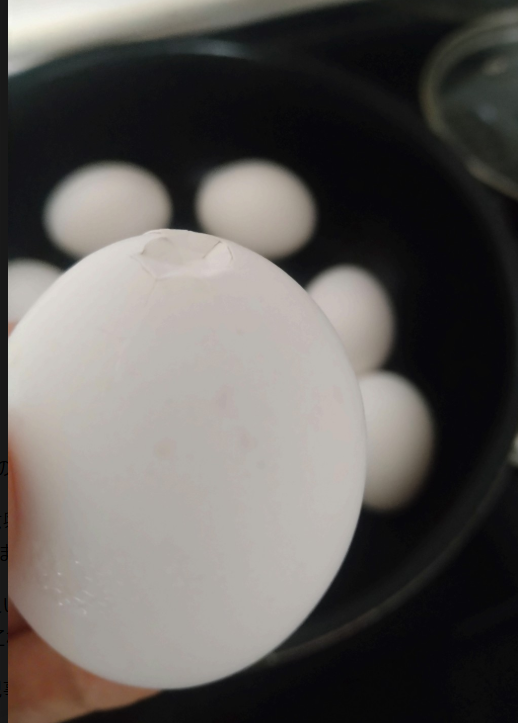
Just before boiling, gently crack the wider, rounded end of each egg with a spoon. This little trick makes the eggs much easier to peel.
Step 2: Add a Small Amount of Water
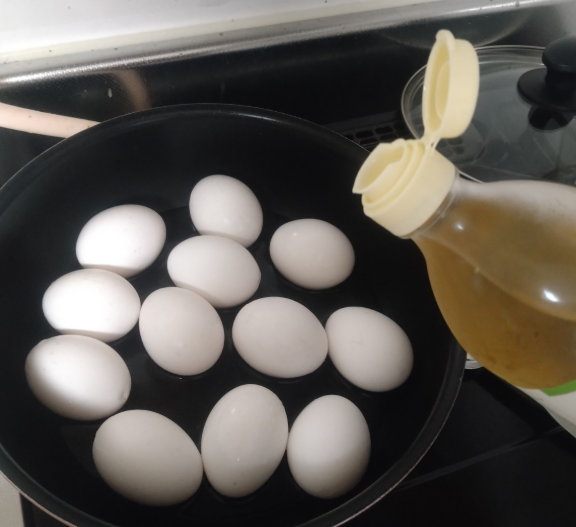
Pour in enough water to reach roughly 1 cm up the bottom of the pan.
We are essentially steam-boiling the eggs instead of submerging them in a huge pot of water.
You don’t need to completely submerge the eggs in water. For even easier peeling, drizzle a little vinegar over the eggs. It’s totally optional, though!
Step 3: Bring It to a Boil
Heat over medium or medium-low heat until the water starts boiling.
Step 4: Cover and Cook
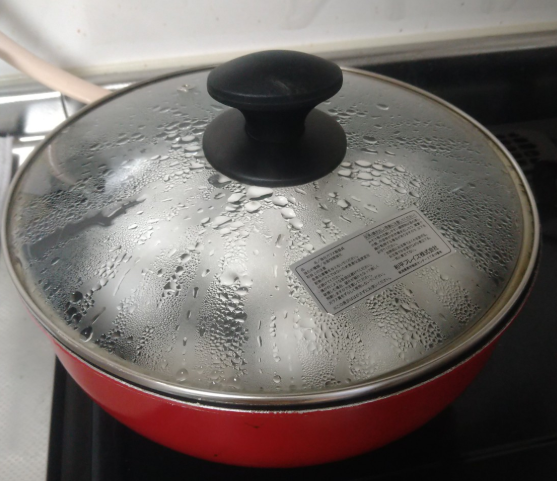
Once boiling, cover the pan and cook for about 4 minutes.
Step 5: Turn Off the Heat and Let Them Sit
Turn off the heat but keep the lid on.
Let the eggs sit for another 3 to 4 minutes.
This is where you control the yolk.
Shorter time:
Soft, creamy, aggressive ramen-shop territory.
Longer time:
A little firmer and easier to handle.
Egg size, cookware, heat level, and starting temperature all affect the result, so consider your first batch an experiment.
Yes.
You have permission to scientifically investigate eggs.
Step 6: Emergency Ice Bath
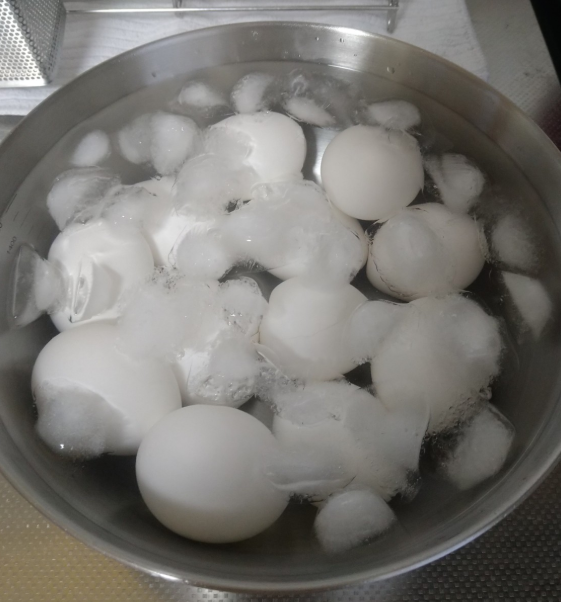
Immediately move the eggs into ice water.
AJITAMA UNIT, RAPID COOLING!
Cooling stops the cooking and also makes peeling easier.
Step 7: Peel Carefully
Once well chilled, gently crack the shell all over and peel.
Doing this under water or a thin stream of running water can help.
This is the moment where a beautiful egg may emerge.
Or one egg may look as though it lost a fight.
Both remain delicious.
Step 8: Add Mentsuyu
Put the peeled eggs into a zip-top bag and add enough mentsuyu to coat them.
One advantage of a bag is that you do not need a huge amount of marinade.
Turn the bag occasionally so every egg gets its fair share of flavor.
After a few hours in the refrigerator:
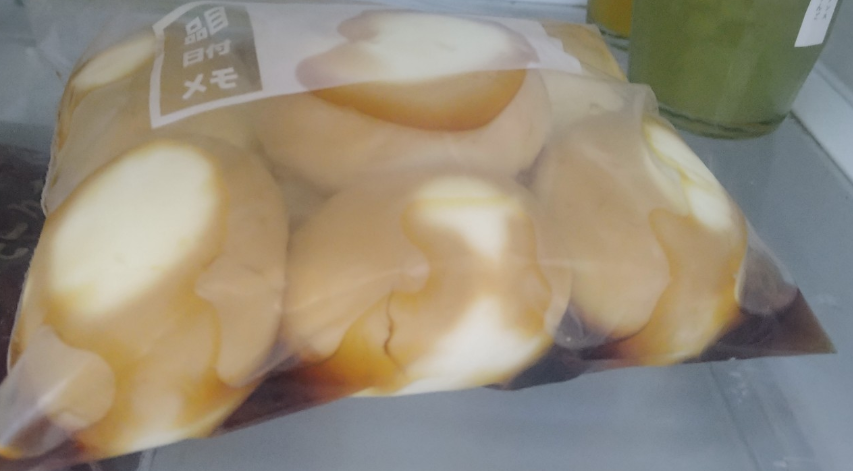
Ajitama army complete.
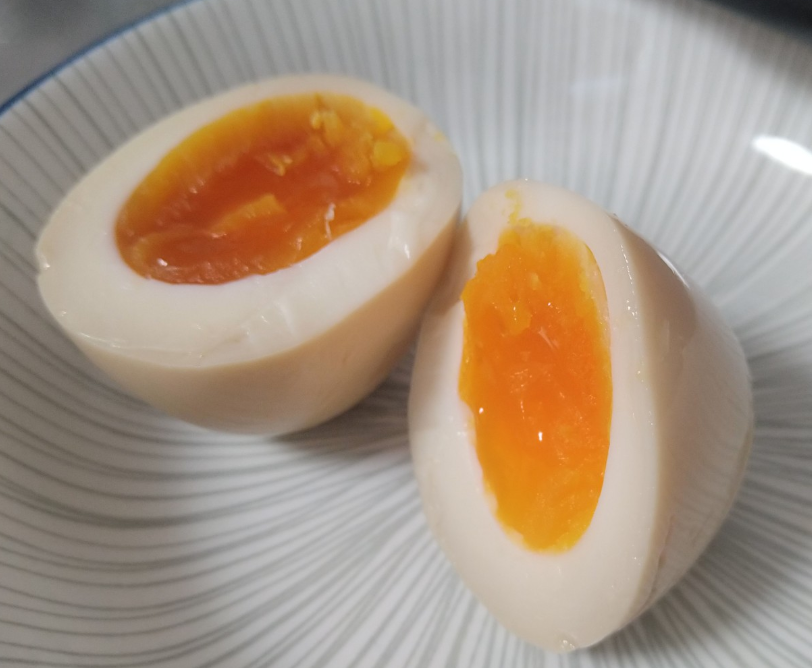
The Moment You Cut One Open
This is the payoff.
Slice the egg.
The white has absorbed that sweet-savory soy-and-dashi flavor.
Then the yolk appears.
Soft.
Golden.
Creamy.
And for approximately three seconds, you feel like the owner of a very successful ramen shop.
That is worth something.
Why This Tiny Food Says Something Bigger About Japanese Cuisine
The more I thought about this recipe, the more I realized that ajitama represents something I love about Japanese food culture.
It is not necessarily extravagant.
It does not need rare ingredients.
It is just an ordinary food—
treated with a little extra attention.
Take an egg.
Control the cooking time.
Cool it quickly.
Season it.
Wait.
Suddenly something inexpensive and familiar becomes deeply satisfying.
You see this philosophy everywhere in Japanese cuisine.
Rice.
Tofu.
Fish.
Dashi.
Pickles.
Eggs.
Very simple ingredients can become surprisingly complex when people pay close attention to temperature, texture, timing, fermentation, seasoning, and presentation.
Maybe that is one reason food in Japan can be so much fun.
There is often a lot of craft hiding inside something that looks simple.
If You Visit Japan, Try Ajitama
If you come to Japan, you will probably encounter ajitama at ramen shops.
Order one.
Cut it open.
Look at that golden yolk.
And appreciate that this tiny egg sits at the intersection of agriculture, food safety, everyday home cooking, and Japanese obsession with getting small details right.
If you stay somewhere with a kitchen, buy a pack of Japanese eggs and some mentsuyu and try making your own—while following the storage instructions and date labeling on the package.
You do not need advanced cooking skills.
You do not need expensive equipment.
You just need eggs, timing, and the courage to peel ten of them.
And once your refrigerator contains a row of homemade ajitama?
Meals become strangely reassuring.
Bad day?
There is an egg.
Lazy dinner?
There is an egg.
Instant ramen looking lonely?
There. Is. An. Egg.
Sometimes quality of life does not require a dramatic upgrade.
Sometimes you just need ten really good eggs waiting for you.
Nin-nin.


コメント