
Hi, this is Hideic.
Like a lot of people, I start many mornings with coffee.
Coffee in one hand.
English study in the other.
Brain slowly booting up.
For years, my understanding of coffee was basically:
Coffee wakes me up. Coffee tastes good. Coffee is probably doing something positive for my life.
That was about it.
Then one day I had a strangely obvious thought:
“Wait… I drink this almost every day. How much do I actually know about it?”
Where does it come from?
Why do beans taste so different?
What exactly changes during roasting?
And why does one coffee taste bright and fruity while another tastes like it could bench-press you?
My wife loves coffee even more than I do, and one day she casually said:
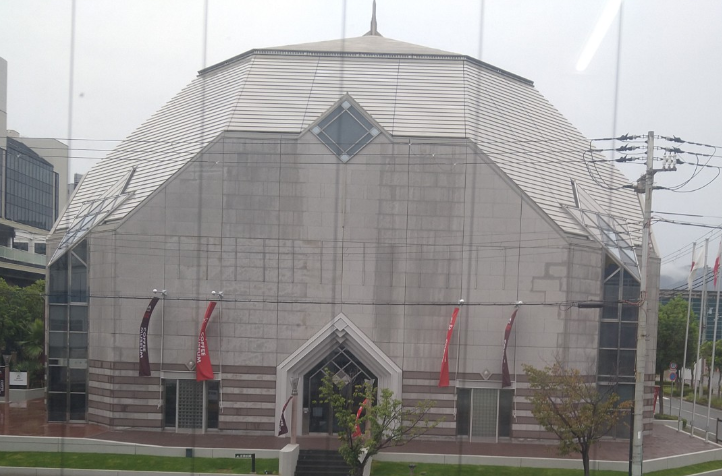
“There’s a UCC Coffee Museum in Kobe. I kind of want to go.”
That sentence was enough.
A museum devoted entirely to coffee?
A recently renewed one?
And an opportunity to make our own blend?
Hideic Coffee Training Arc officially began.
- We Almost Missed the Coffee Before We Even Learned About Coffee
- One Cup of Coffee Has a Much Bigger Story Than I Realized
- Then I Realized UCC Is Much More Than a Coffee Brand
- Then Came the Main Event: Building My Own Coffee
- Apparently, I Am Brazilian Coffee and My Wife Is Guatemalan Coffee
- Knowing the Story Changed the Taste
We Almost Missed the Coffee Before We Even Learned About Coffee
We booked an afternoon visit and also reserved a coffee-blending experience later that day.
There was also a free tasting session around the time we planned to arrive.
Perfect.
Except we made one classic mistake:
We assumed we had plenty of time.
We got slightly confused on the way, took a wrong turn, and suddenly the relaxed coffee date became a speed-walking competition under the summer sun.
At one point, we asked someone working nearby for directions.
He was incredibly kind and carefully explained two possible routes.
We hurried toward the museum and arrived just after the tasting time.
I asked:
“Um… I know we’re a little late, but is the tasting still possible?”
Thankfully, yes.
Victory.
A cup of iced Brazilian coffee appeared in front of us.
Now, this should have been a sophisticated moment.
Smell the aroma.
Take a small sip.
Notice the acidity.
Discuss the finish.
Instead:
Gulp. Gulp. Gulp.
We had just power-walked through the heat.
That coffee did not reach my palate.
It reached my soul.
The staff then showed us the beans and the freshly ground coffee and invited us to compare the aromas.
My wife and I smelled them carefully.
Pause.
Another smell.
Then we looked at each other.
“…Can you tell?”
“…Not really.”
Excellent start.
We had entered a coffee museum and immediately demonstrated that we knew almost nothing about coffee.
But I learned something useful.
Coffee, like life, is better when you leave yourself enough time to actually notice it.
One Cup of Coffee Has a Much Bigger Story Than I Realized
Once inside, we started moving through the exhibits.
The museum walks you through coffee’s history, cultivation, processing, roasting, brewing, and culture.
And the deeper we went, the more ridiculous my old relationship with coffee started to seem.
Every morning I had been casually drinking something connected to farms, climates, centuries of history, processing methods, trade, roasting technology, and an enormous chain of human effort.
Coffee is generally traced back to Ethiopia, later spreading through Yemen and eventually around the world.
Most commercially produced coffee comes mainly from two species:
Arabica and Canephora, often called Robusta.
Coffee-producing regions are concentrated around the tropics in what is often called the Coffee Belt.
And then there is the amount of work behind every single cup.
Growing.
Harvesting.
Processing.
Drying.
Transporting.
Roasting.
Grinding.
Brewing.
Suddenly my normal morning routine felt a little less normal.
I thought:
“Maybe I should stop drinking this like it came out of a magical brown-liquid machine.”
Then I Realized UCC Is Much More Than a Coffee Brand
This part surprised me too.
I knew UCC.
Of course.
In Japan, the UCC name is everywhere.
But I had never really thought about the scale of the company’s history and work.
One of its most famous products, UCC Milk Coffee, dates back to 1969 and is widely recognized as the world’s first canned coffee with milk.
That made me stop.
Wait.
That old-school canned coffee was historically important?
I had completely underestimated it.
Sorry, UCC.
Respect restored.
The museum also showed how deeply the company is involved in coffee research, education, cultivation, sustainability, and roasting technology.
What impressed me was that the museum did not feel like:
“Look how amazing our company is.”
It felt more like:
“Here is how incredibly deep the world of coffee actually is.”
And that made the company itself more interesting too.
Then Came the Main Event: Building My Own Coffee
Finally, it was time for the blending experience.
This was where Hideic became unnecessarily serious.
We were given several different coffees to compare and combine.
My mission was clear:
Create a bold, rich, deeply satisfying coffee that tastes unmistakably like COFFEE.
No hesitation.
No delicate philosophical ambiguity.
I wanted power.
I tasted an Ethiopian coffee with a brighter, fruitier character.
Very interesting.
Very elegant.
But for my personal mission?
I looked at it like a football manager making a difficult roster decision.
“You are talented. But today, you do not fit the system.”
Ethiopia: temporarily benched.
A darker Colombian roast had a nice bitterness and depth, but too much could overpower the whole blend.
Then Guatemala entered the picture.
That was it.
The center of the team.
After several experiments, my final blend became:
Brazil 20%
Guatemala 60%
Colombia 20%
Ladies and gentlemen:
The Hideic Golden Ratio.
Guatemala controlling the midfield.
Brazil and Colombia supporting from both sides.
The Champions League of coffee.
At least in my head.
The best part was that we could take home 100 grams of the blend we created.
We do not own a grinder, so the staff ground it for us and packed it beautifully.
Now the experience did not end at the museum.
We could take it home.
Brew it again.
And drink a coffee that had a story attached to it.
That is such a simple thing.
But I loved it.
Apparently, I Am Brazilian Coffee and My Wife Is Guatemalan Coffee
There was also a fun personality-style activity where the museum matched you with a coffee character based on your preferences.
My result?
Brazil.
Cheerful.
Friendly.
Easygoing.
My wife?
Guatemala.
More intense.
Passionate.
We looked at the results.
Then at each other.
Then laughed.
“Why is this weirdly accurate?”
Apparently, coffee had now begun evaluating our marriage.
We finished the day by taking a ridiculous commemorative photo at a UCC canned-coffee-style photo spot.
Very educational.
Very cultured.
Very serious adults.
Obviously.
Knowing the Story Changed the Taste
But the thing I remember most was not a single exhibit.
It was the feeling I had afterward.
Coffee had changed.
Not physically.
The cup waiting for me the next morning would still be coffee.
But now I could see more behind it.
A region.
A climate.
A farmer.
A plant.
A roast.
A company.
A culture.
A long journey that somehow ended in my kitchen at 5 in the morning while I study English.
And maybe that is one of the easiest ways to make everyday life feel richer.
You do not always need a luxury trip.
You do not need some dramatic transformation.
Sometimes you just need to look more closely at something you already love.
Learn its story.
Notice the details.
Slow down enough to taste it.
That can turn an ordinary habit into something surprisingly meaningful.
So if you love coffee, this museum is an easy recommendation.
But even if you are only casually interested, I think it is still worth visiting.
Because this is not only a museum about coffee.
It is a reminder that ordinary things become much more interesting when you understand what is behind them.
And next time I drink a really good cup of coffee?
I promise I will smell it first.
Probably.
Nin-nin.
コメント